The morning after a night out, your skin usually tells the story before you do. Puffiness, dullness, and that slightly tight feeling even after cleansing. You do not look sick exactly, but you do not look your best either.
Most people drink some water, get on with their day, and assume it will sort itself out. And often it does. But if you are someone who goes out regularly, understanding how alcohol affects your skin is genuinely useful. Not because you need to stop drinking, but because knowing what is happening helps you respond better, and helps you catch it if the pattern starts to add up over time.
How Alcohol Affects Your Skin: What Is Actually Happening
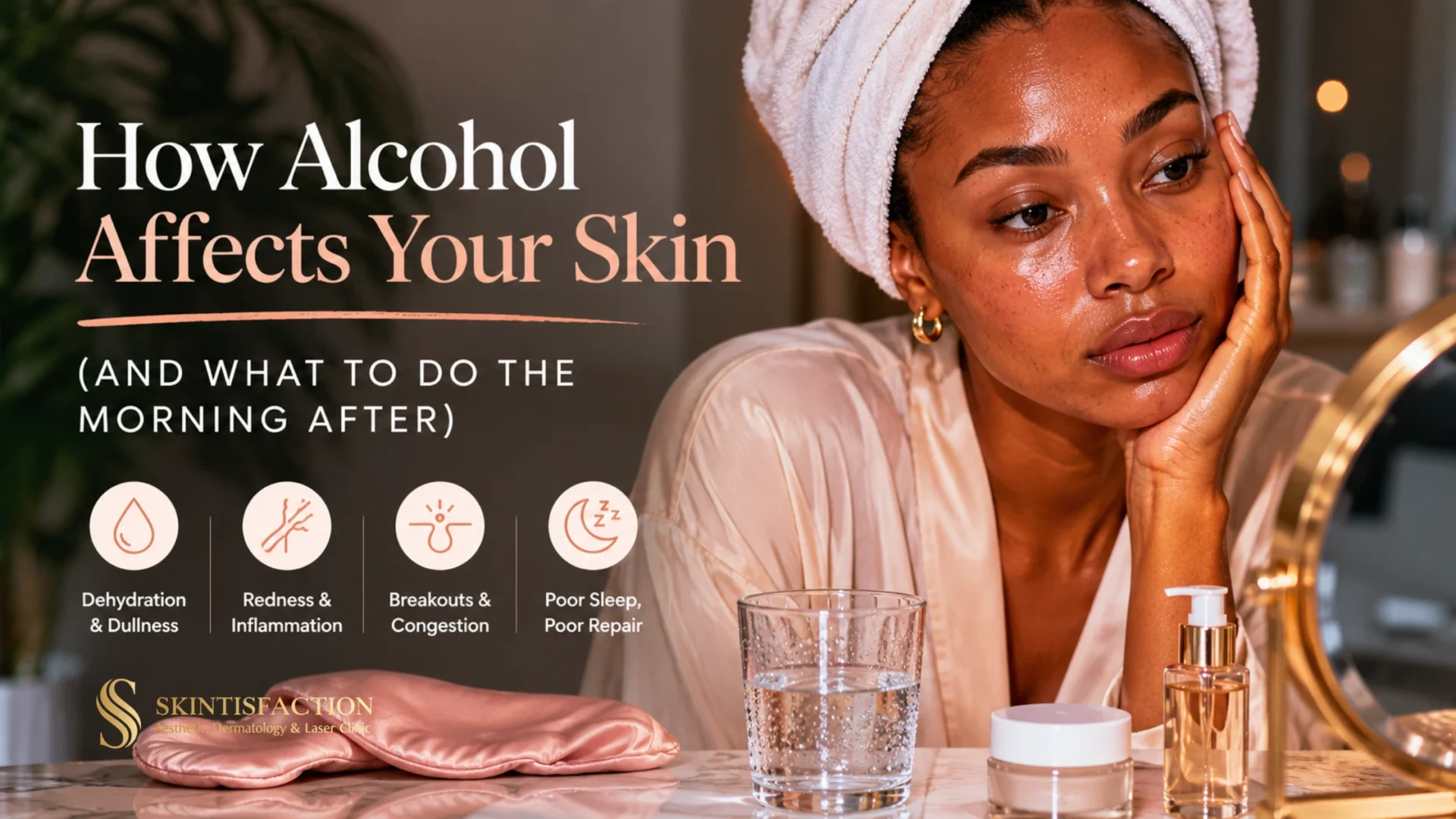
When you drink, four things happen simultaneously that affect your skin directly.
Your skin loses water faster than usual. Alcohol is a diuretic. It signals your kidneys to increase urine output, which means your body is shedding water at a faster rate than it normally would. Your skin is not immune to this. The result is dehydration that shows up as dullness, tightness, and more visible fine lines. It is not that new lines have appeared overnight. It is that dehydrated skin exaggerates what is already there.
Your blood vessels expand. Alcohol causes vasodilation, which is why your face often looks flushed during and after a night out. For most people, this fades within a few hours. For those with rosacea or particularly reactive skin, the redness can linger longer. With repeated exposure over time, small blood vessels can become permanently dilated, showing up as persistent redness or visible capillaries, particularly across the nose and cheeks.
Your body mounts an inflammatory response. Alcohol is an inflammatory trigger. For acne-prone skin, this often shows up as a breakout one or two days after drinking. Not necessarily the night itself, but shortly after. For anyone dealing with hyperpigmentation, which is the majority of people with melanin-rich skin, inflammation is one of the main triggers that deepens dark spots or creates new ones. A night out can aggravate marks that were just starting to fade. Research published in Clinical, Cosmetic and Investigational Dermatology confirms that alcohol stimulates the production of inflammatory cytokines in the skin, which is part of why these reactions are so consistent.
Your sleep quality drops. Alcohol sedates, but it does not restore. You may fall asleep quickly, but the second half of the night is disrupted. You miss out on the deep, restorative sleep stages where skin repair happens. This is a significant part of why your skin looks flat and tired the morning after. It is not just dehydration. It is skin that has not had the time it needed to repair.
Why the Effects Hit Harder in Lagos
Most articles on this topic are written with a European or North American climate in mind. Lagos is a different environment entirely.
The heat. The humidity. Long hours in air conditioning that strip moisture from your skin. Your skin is already working harder to stay balanced than it would be in a temperate climate. Layer alcohol-driven dehydration on top of that, and the effects compound. The morning-after dullness is more pronounced. Recovery takes longer. For people managing hyperpigmentation, any additional inflammatory trigger lands on skin that is already more susceptible.
This is not cause for alarm. It is just useful context. Recovery matters a little more here than the generic advice suggests.
The Difference Between One Night and a Regular Pattern
There is a meaningful difference between what a single night does to your skin and what regular drinking does over months or years.
After one night: puffiness from fluid redistribution, a dull and dehydrated complexion, possible breakouts in the following days, and dry or tight skin. These are temporary. With adequate rest, water, and a sensible routine, most people’s skin recovers within 24 to 48 hours.
Over time: the cumulative picture is different. Persistent dehydration gradually accelerates the appearance of fine lines. Repeated inflammation makes hyperpigmentation harder to treat and easier to trigger. Broken capillaries from repeated vasodilation become a long-term fixture rather than a temporary flush. Skin loses elasticity more quickly. Collagen production, already declining with age, takes an additional hit.
None of this is dramatic or sudden. It builds quietly. Many people only notice it when they look back at photos from a few years ago and see the difference in their skin’s quality and tone. The changes are not attributed to drinking at the time because they do not happen the morning after a single night. They accumulate across dozens of nights over several years.
If you drink regularly and you care about your skin, it is worth being aware of this pattern even if you have no intention of changing your habits overnight. Awareness helps you make better decisions about when to seek professional support and understand why certain skin concerns are proving stubborn to treat.
How to Help Your Skin Recover the Morning After
This is where most advice either goes too vague or oversimplifies. Here is what is actually worth doing.
Rehydrate with something better than plain water. Water is important, but it takes time to show up in your skin, and if you are significantly dehydrated, plain water is not the most efficient route to recovery. Electrolytes help your body actually retain fluid rather than excrete it. Coconut water, oral rehydration salts, or an electrolyte drink work noticeably better than water alone first thing in the morning. If you can remember to do it before you sleep, even better.
Keep your skincare routine simple. The morning after is not the time for actives, exfoliants, vitamin C serums, or retinol. Your skin barrier is under stress. A gentle cleanser, a good hydrating moisturiser, and SPF are all you need. Short and supportive. Piling on products will not accelerate recovery and may add irritation to an already compromised barrier.
Use cold water on your face. It will not fix anything, but it helps temporarily with the puffiness from fluid redistribution. That alone makes it worth doing.
Give it time. Most acute effects resolve within 24 to 48 hours if you eat well, sleep properly, and maintain adequate fluid intake. If your skin is still looking consistently off after a few days, something else may be contributing, and it is worth paying attention to that.
When Your Skin Needs More Than a Morning Routine
Some people go through a heavier season and notice their skin simply does not bounce back the way it used to. End-of-year events, a run of weddings, holiday travel, and a particularly social quarter at work. The dullness lingers. Congestion builds up. Skin texture feels off, and a basic routine is not moving it.
This is where a HydraFacial becomes genuinely useful, not just as an indulgence but as a targeted reset. If your skin feels dull, congested, and slow to recover, this is exactly what it is designed to address. It clears the congestion that builds up while simultaneously infusing the skin with deep hydration and requires no downtime. You are not looking worse before you look better. For people with busy schedules, that matters.
It is also worth thinking about timing. Booking a HydraFacial at the tail end of a busy social season, rather than waiting for your skin to fully deteriorate, means you are maintaining rather than reversing. That approach gets better results.
When to See a Dermatologist
There is a category of skin changes that goes beyond what lifestyle adjustments or a single treatment can address.
If you are noticing persistent breakouts that do not seem linked to any obvious cause, hyperpigmentation that keeps worsening despite your best efforts, redness that is not clearing up, or a gradual shift in your skin’s overall quality and texture over the past year or two, those are signs your skin may need a closer look. They are not just cosmetic concerns. They are indicators that something in the skin is not functioning as it should.
A Clinical Dermatology consultation at Skintisfaction gives you a proper assessment of what is actually driving the issue. Dr. Uzo can identify whether what you are seeing is related to lifestyle factors, an underlying skin condition, or both, and put together a treatment plan that addresses the root cause rather than just the surface.
The earlier you get a clear picture of what is going on with your skin, the more options you have.
Your skin is resilient. A night out is not going to cause lasting damage if you are generally looking after yourself. But if your skin is not bouncing back the way it used to, it is worth finding out why.
Book a consultation with Dr. Uzo at Skintisfaction to understand what your skin actually needs. Schedule your appointment here.