You are eating regularly, not skipping meals, and your skin still is not cooperating. Understanding how diet affects your skin goes beyond whether you are eating enough. It is about what you are eating, how often, and what that is doing to your skin over time.
This is not a clean-eating article. It is a straight look at the real Lagos food environment (the owambes, the office lunches, the late-night suya) and what the evidence says about how those patterns show up on your face.
How Diet Affects Your Skin: The Mechanisms Worth Knowing
Three pathways connect what you eat to what your skin does.
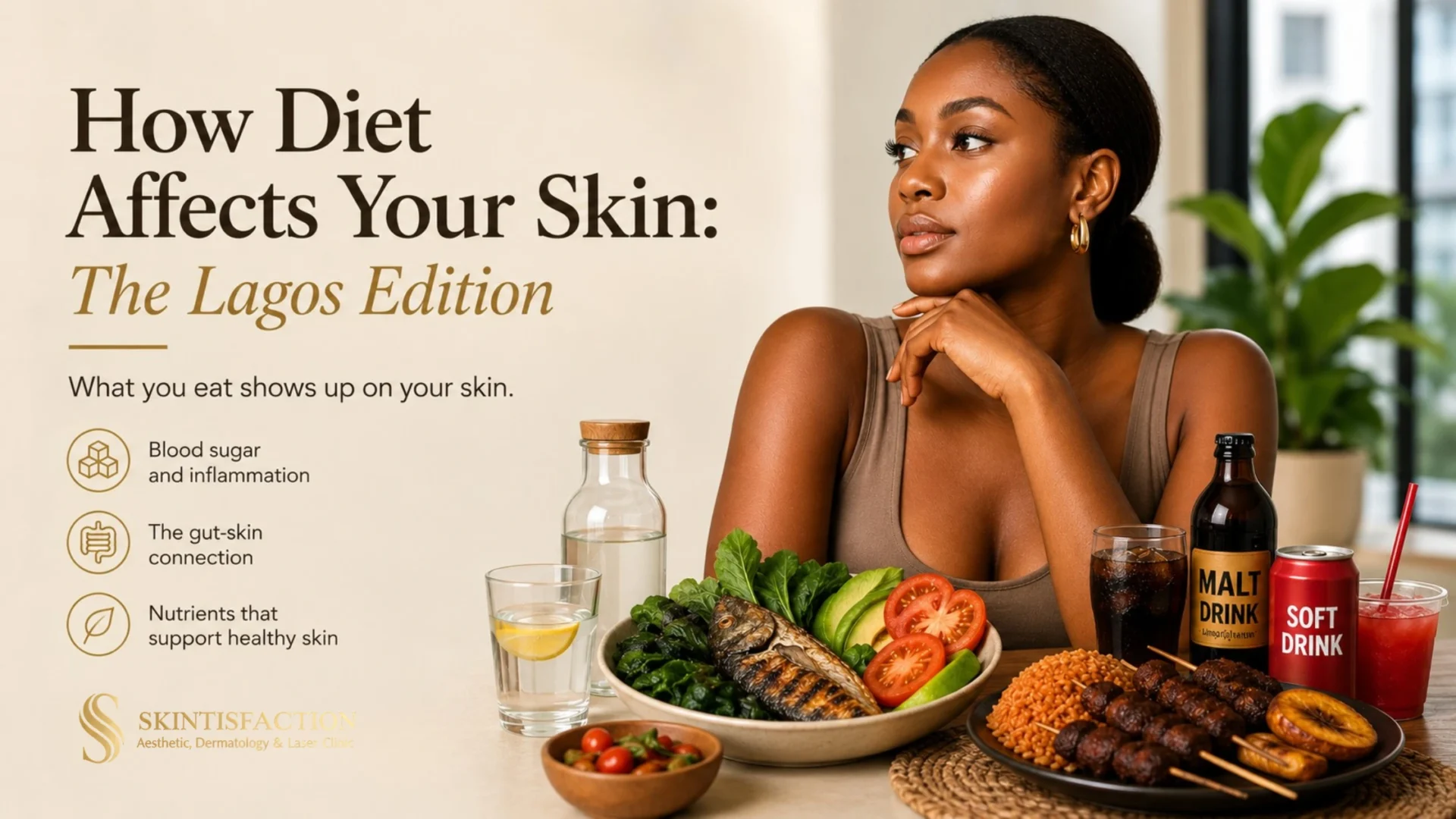
Blood sugar and inflammation. When you eat high-glycaemic foods, your blood sugar rises quickly. Your body responds by releasing insulin, which elevates insulin levels and drives up sebum production and triggers inflammation throughout the body, including in the skin. This is one of the clearest links between diet and acne, and it means the skin consequences of a high-sugar, high-refined-carbohydrate diet are not random. They are predictable.
The gut-skin connection. The state of your gut microbiome has a direct relationship with skin health. A diet low in fibre and high in sugar and processed foods disrupts the balance of gut bacteria, driving systemic inflammation. That inflammation often surfaces on the skin first, as breakouts, redness, or a dullness that does not shift, no matter what you put on your face. Skincare addresses the surface. Diet addresses one of the upstream causes.
Nutrient deficiencies. Skin needs specific nutrients to repair itself, maintain its barrier function, and stay clear: zinc, vitamins A, C, and E, and omega-3 fatty acids, among them. It is entirely possible to be eating enough calories and still be deficient in these, particularly if the diet is heavily processed or lacks variety. Deficiencies show up slowly, which is why people rarely connect them to skin changes until the pattern is well established.
The Lagos Food Reality
Most articles on diet and skin are written for a Western food context. The Lagos food environment is different, and it is worth being specific.
The carbohydrate question. Nigerian cuisine is built around carbohydrates: white rice, eba, fufu, bread, pounded yam. These are not inherently problematic foods, and for most people, they are deeply tied to culture and family. But eaten in large quantities, frequently, without enough protein or vegetables to slow absorption, they sit high on the glycaemic index and contribute to the blood sugar patterns that drive skin inflammation. The issue is less the food itself and more the portion sizes and combinations that make up a typical Lagos meal.
Suya and processed meats. Regular consumption of grilled and processed meats introduces advanced glycation end products (AGEs) into the diet. AGEs damage collagen and elastin fibres in the skin, which accelerates the appearance of fine lines and loss of firmness over time. Occasional suya at an event is not the concern. Frequent consumption as a default protein source is.
Sugary drinks. This is where how your diet affects your skin day to day is most visible and most underestimated. Malt drinks, soft drinks, sweetened zobo, packaged juice, and sweetened Chapman at the bar.
Lagos consumption of these is high across all demographics, and they are among the most direct dietary drivers of skin inflammation.
A single bottle of malt contains more sugar than most people would voluntarily add to food. These drinks often feel incidental (something to drink with a meal, not a dietary choice), which is part of why they are easy to overlook.
Eating out and the processed food drift. A significant proportion of Lagos professionals do not cook regularly. Restaurant food and takeout tend to be higher in refined oil, salt, and sugar than home-cooked equivalents, and lower in the fibre and variety that gut health depends on. When eating out is the default rather than the exception, the cumulative effect on the gut (and therefore on the skin) adds up.
What the local diet already does well. This is not one-sided. Nigerian cooking uses ingredients that are genuinely good for skin. Tomatoes and peppers are rich in antioxidants. Leafy greens in soups provide vitamins and minerals that support skin repair. Mackerel (titus) is one of the best natural sources of omega-3 fatty acids available in Lagos markets. Egusi contains zinc, which is directly involved in managing skin inflammation. The traditional diet, cooked at home with fresh ingredients, has real strengths. The modern Lagos version of it (bought, processed, sugared, and rushed) loses a lot of those benefits.
What Shows Up on Your Skin
Acne and breakouts. The link between high-glycaemic eating and acne is one of the most consistent findings in skin nutrition research. A review published in the American Journal of Clinical Dermatology found strong support for low glycaemic diets in reducing acne lesions, with dairy also identified as a contributing factor in some people. If breakouts follow a pattern (worse after certain periods of eating, better when diet changes), that is usually dietary influence worth investigating.
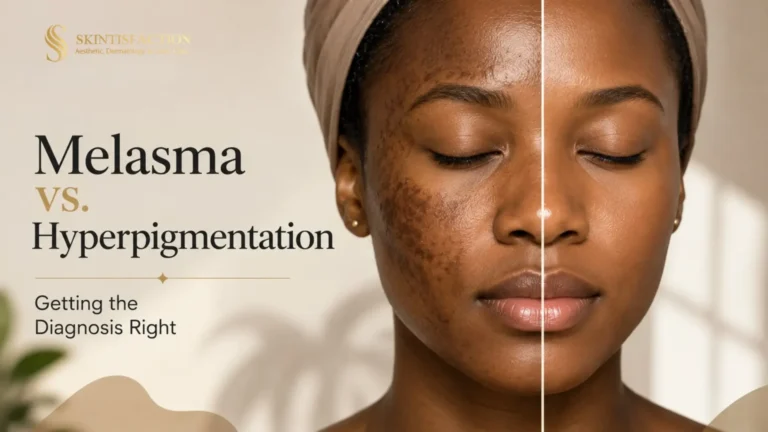
Hyperpigmentation. Diet does not cause hyperpigmentation directly, but chronic low-grade inflammation slows its resolution. Post-inflammatory marks that should fade in a few months can persist for much longer in a body dealing with ongoing dietary inflammation. For melanin-rich skin, where hyperpigmentation is already more likely and more pronounced, this matters more than it would for other skin types.
Dull, uneven skin tone. Dullness is often a combination of dehydration, sluggish circulation, and nutrient deficiency, all of which have a dietary component. Many people in Lagos carry a low level of dehydration without realising it. The combination of heat, air conditioning, and a diet heavy in sodium and caffeine makes this more common than it might seem. Skin that looks flat and congested despite a consistent topical routine is often signalling something internal.
Premature ageing. Sugar-driven glycation is one of the clearest mechanisms of accelerated skin ageing. When sugar molecules bind to collagen and elastin proteins, they become stiff and brittle. The result is skin that loses firmness and develops fine lines earlier than it otherwise would. This process is slow and cumulative, which means the effects of current eating habits on how skin ages over the next decade are already underway.
What to Actually Do
Not a meal plan. Practical changes that are realistic in a Lagos context.
The single highest-impact change most people can make is reducing sugary drinks. Not eliminating them entirely if that is unrealistic, but reducing the frequency and quantity. Replacing a malt or soft drink with water for even two or three meals a day makes a meaningful difference to the blood sugar load the body is managing.
Beyond that, the direction is towards lower glycaemic eating without abandoning Nigerian food. If your plate is mostly rice, shift the balance: add more vegetables and protein so the rice is no longer the main component. More fish, particularly oily fish like mackerel, as a regular protein source rather than an occasional one. More variety in what goes into the pot. These are adjustments, not overhauls.
Hydration is unglamorous but genuinely impactful. If skin consistently looks dull and congested, increasing water intake (particularly in a Lagos climate) is one of the lowest-effort, highest-return interventions available.
It is also worth paying attention to patterns. Skin is remarkably consistent in how it responds to dietary triggers once you start tracking. If breakouts reliably follow certain eating periods, or skin looks better after a week of cooking at home, that is information worth acting on rather than coincidence to dismiss.
When to See a Clinical Nutritionist
If you have adjusted your diet and your skin is still not responding, that usually means something deeper is driving the issue: a gut health problem, a specific nutrient deficiency, or a hormonal factor that dietary changes alone will not resolve without a proper assessment.
A Clinical Nutrition consultation at Skintisfaction is a clinical evaluation of what is actually happening with your nutrition, not generic advice. The nutritionist works alongside the dermatology team, which matters because skin concerns with a dietary component often have a clinical one as well. The two are not separate.
When to See a Dermatologist
If your skin has been persistently problematic despite genuine lifestyle changes (stubborn acne, hyperpigmentation that is not shifting, unexplained changes in texture or tone), a Clinical Dermatology consultation is the appropriate next step. Diet is one input into skin health. It is rarely the whole picture.
Dr. Uzo will assess what is actually driving your skin concerns and put together a treatment plan that addresses root causes, not just surface symptoms.
If your skin is not reflecting the effort you are putting in, there is usually a reason for it. Book a consultation at Skintisfaction and get a clear picture of what your skin actually needs. Schedule your appointment here.