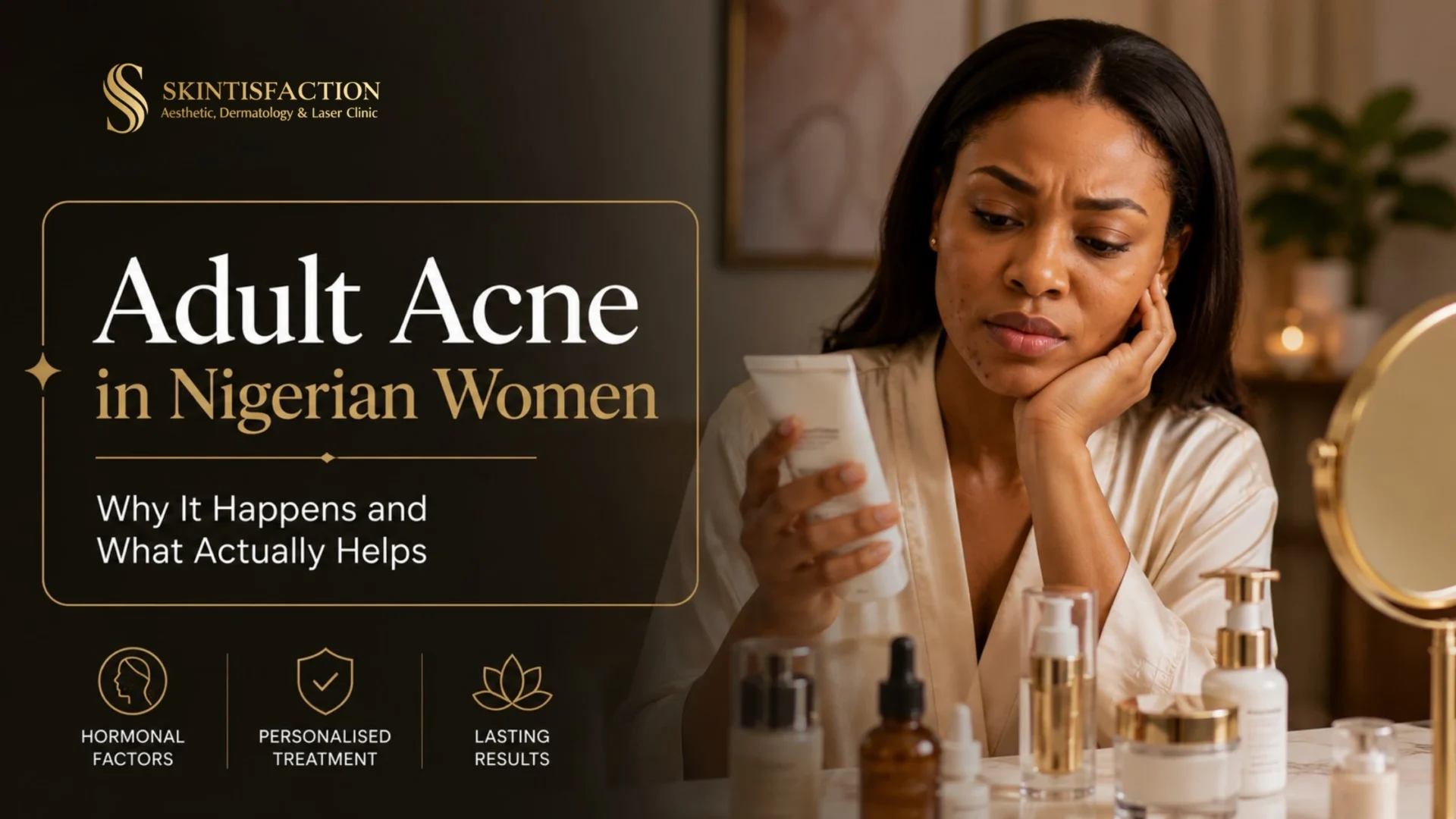
You are in your 30s, you eat reasonably well, you wash your face, and you are still breaking out. Not the occasional spot before your period, but persistent, frustrating breakouts along your jaw and chin that feel like they belong to a teenager, not a professional woman managing a career and a household in Lagos.
If this sounds familiar, you are not alone. At some point, you start wondering whether you are doing something wrong. Maybe it is the moisturiser. Maybe it is the stress. Maybe you just need a stronger cleanser. Before long, your bathroom shelf is full of products that promised clearer skin and delivered very little.
Adult acne in Nigerian women is far more common than most people realise, and it is also one of the most misunderstood skin conditions seen at dermatology clinics. The advice most women receive, whether from pharmacies, social media, or well-meaning friends, is usually designed for teenage acne. When it does not work, the frustration builds.
This article explains what is driving adult acne after 30, why it behaves differently to the acne you may have had at 16, and what treatment approaches genuinely make a difference.
Adult Acne Is Not the Same as Teenage Acne
Teenage acne is largely driven by hormones flooding the body during puberty, causing oil glands to overproduce across the whole face. It tends to show up on the forehead, nose, and cheeks, and for many people, it settles on its own as hormone levels stabilise in the early 20s.
Adult acne is a different picture. It tends to cluster around the lower face: the jaw, chin, and sides of the cheeks. It is often more inflammatory (meaning deeper, more painful spots rather than surface blackheads), and it is closely tied to hormone fluctuations, stress, and lifestyle factors that are very much part of everyday life as an adult woman in Lagos.
It also responds poorly to the products marketed for teenage skin, which are often too harsh and strip the skin barrier without addressing the underlying cause.
The Real Causes of Adult Acne
Adult acne rarely has a single cause. In most cases, it is a combination of factors that interact and reinforce each other. Hormones may set the stage, but they are rarely acting alone. Stress, diet, skincare habits, and certain medications can all increase inflammation or oil production, making existing hormonal tendencies more noticeable. Understanding how they connect is what makes treatment more targeted.
Hormonal Fluctuations
Hormones are the most common driver of adult female acne. Androgens are hormones that both men and women produce. They stimulate the skin’s oil glands, and even small shifts in hormone levels can trigger breakouts. This is why many women notice a predictable pattern: breakouts around their period, after coming off hormonal contraceptives, or during perimenopause.
If your acne follows a monthly cycle and concentrates along the jaw and chin, hormones are almost certainly part of the story. The article on why your skin breaks out around your period covers the menstrual-cycle connection in more detail.
Persistent adult acne accompanied by irregular menstrual cycles, increased facial hair, or unexplained weight gain may sometimes point to an underlying hormonal condition such as PCOS, which is worth discussing with a doctor rather than managing with skincare alone.
Stopping Contraceptives
This is one of the most common but least-discussed triggers for adult acne. Hormonal contraceptives such as the pill often suppress acne by stabilising androgen levels. When you stop taking them, androgen activity can increase again, and breakouts that were previously controlled may return or worsen. This can continue for several months as your body adjusts.
Stress and Cortisol
Lagos is not a low-stress environment. Long commutes, demanding work, financial pressure, and the general pace of the city all raise cortisol levels. Cortisol triggers increased oil production and inflammation, both of which feed acne. For many professional women, stress is a year-round acne trigger rather than an occasional one.
Diet
Diet is unlikely to be the sole cause of acne, but it can influence how active breakouts become in people who are already prone to them. High-glycaemic foods like refined semovita, sugary drinks, and pastries cause blood sugar spikes that increase insulin and androgen activity, which in turn can stimulate oil production. The evidence here is reasonably consistent, though it does not mean every person with acne needs to overhaul their diet.
Dairy is a more variable story. Some women notice a clear connection between dairy intake and breakouts; others see no pattern at all. If your skin tends to flare after certain foods, it is worth tracking, but it is not something to act on without evidence specific to your own skin.
Heavy or Pore-Blocking Skincare Products
Nigerian skincare culture has a long tradition of rich creams, body butters, and oils. Many of these are wonderful for the body but problematic on the face, particularly for skin that is already prone to breakouts. Products labelled as “moisturising” or “brightening” can be heavily occlusive and block pores, contributing to breakouts in acne-prone skin. Fragrance and certain preservatives in products can also inflame already-sensitive skin.
Why Melanin-Rich Skin Makes It More Complicated
For women with darker skin tones, the challenge with adult acne is rarely just the breakout itself. It is what comes after: post-inflammatory hyperpigmentation (PIH), the dark marks left behind once a spot heals.
On melanin-rich skin, PIH is more common, more visible, and takes significantly longer to fade than on lighter skin. A breakout that clears in a week can leave a mark that takes months to resolve without treatment. This is why women with darker skin often feel like their acne never truly clears, because even when the active spots are gone, the marks remain.
It also means that aggressive DIY approaches (scrubbing, squeezing, or using harsh over-the-counter treatments) tend to cause more harm than good on dark skin. Each act of irritation creates a new opportunity for PIH, and persistent inflammation increases the risk of permanent acne scarring, particularly when spots are repeatedly disturbed rather than left to heal.
What Works and What Does Not
Targeted Prescription Topicals
Over-the-counter products are rarely enough for persistent adult acne, particularly when hormones are involved. Rather than targeting acne from a single angle, dermatologists usually combine treatments that address different aspects of the problem at once: reducing oil production, preventing clogged pores, calming inflammation, and minimising dark marks.
In practice, this often means a combination of retinoids to regulate cell turnover and prevent congestion, azelaic acid to reduce inflammation and fade PIH at the same time, and occasionally topical antibiotics used alongside other treatments (rather than on their own) to reduce bacterial activity without increasing resistance.
The advantage over relying on trial and error is precision. You get a plan built around what is driving your acne, not a generic product designed for teenage skin.
Hormonal Treatment
For women whose acne is clearly hormone-driven, a dermatologist may recommend a hormonal approach alongside topical treatment. This is a clinical decision that depends on your health history and overall picture, but for women who have not responded well to topicals alone, it is worth discussing.
In-Clinic Treatments
Chemical peels, particularly those using salicylic or mandelic acid, are effective for adult acne on dark skin because they clear congestion, reduce oil production, and help fade PIH simultaneously. They need to be done by a clinician who understands melanin-rich skin to avoid triggering further pigmentation.
A clinical dermatology assessment is the most important first step because it identifies which factors are driving your acne before any treatment begins.
What Does Not Help
Harsh scrubs and exfoliants tend to worsen adult acne, particularly the inflamed, deep kind. The temptation is understandable: walk into almost any pharmacy in Lagos, and you will find shelves full of products promising rapid acne relief. Most of them target surface oil and bacteria, addressing teenage acne but missing the hormonal and lifestyle drivers of persistent acne in women. Home remedies like toothpaste, lemon juice, or neat tea tree oil can cause significant irritation and PIH on dark skin.
Patience matters too. Adult acne does not resolve overnight, regardless of the treatment. Most dermatology plans take 8 to 12 weeks to show meaningful results, which is important to know upfront so the process is not abandoned too early.
Frequently Asked Questions
The Clearest Skin You Have Had in Years
Adult acne can feel especially frustrating because it shows up at a stage of life when you thought the breakout years were behind you. The good news is that understanding what is driving them is usually the turning point. Once the underlying causes are identified, treatment becomes far more focused, and clearer skin becomes a realistic goal rather than a matter of ongoing trial and error.
If you have been dealing with persistent breakouts, stubborn jawline acne, or dark marks that will not fade, a consultation with a dermatologist will give you a clear picture of what is going on and a treatment plan built around your skin.
Book your consultation at Skintisfaction and let’s work out what your skin needs.